
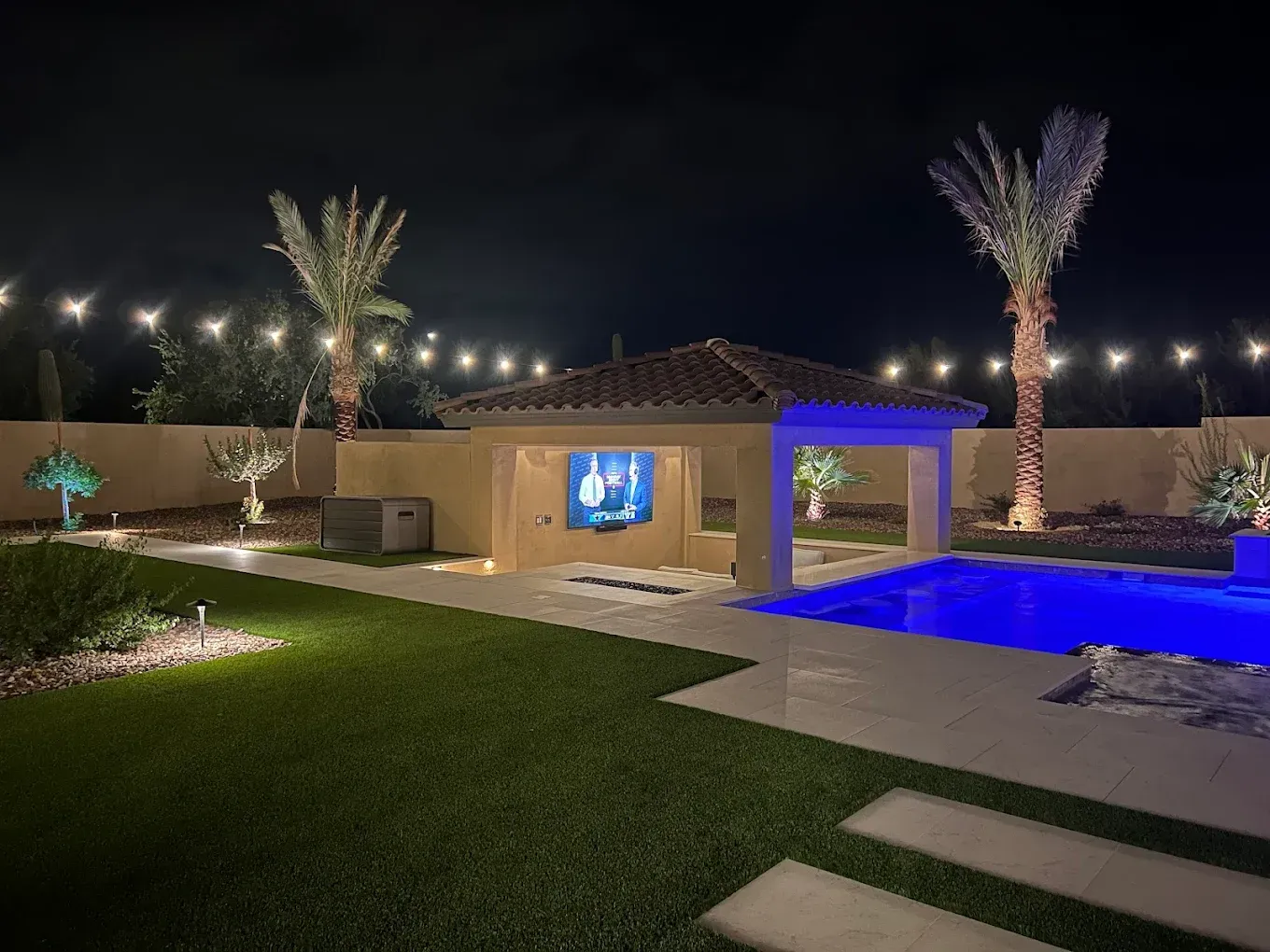
Outdoor Spaces That Work After Dark
Landscape Lighting in Mesa for properties where outdoor living extends past sunset
Desert Glow Lighting & Misting designs landscape lighting systems that bring function and visual interest to properties in Mesa, Gilbert, Peoria, and surruonding areas once natural light fades. Arizona homes often include expansive outdoor areas built for evening gatherings, and proper lighting ensures those spaces remain usable and safe after dark. Strategic fixture placement transforms how pathways, garden beds, architectural details, and water features appear once the sun sets.
Landscape lighting involves deciding which features merit emphasis, selecting fixtures that produce the appropriate beam spread and intensity, and positioning those fixtures to avoid glare while achieving the desired effect. Trees can be uplit to create dramatic silhouettes, pathway edges marked with low-level fixtures for safe navigation, and garden plantings highlighted to add depth across the yard. Each decision affects both visibility and the overall atmosphere of the outdoor environment.
Schedule a consultation to review your property layout and discuss lighting placement that aligns with how you use your outdoor areas.
What Strategic Lighting Accomplishes in Outdoor Environments
Landscape lighting systems begin with an evaluation of the property's layout, existing features, and the homeowner's priorities for nighttime use. Fixtures are selected based on the surface being illuminated—uplights for trees and architectural elements, path lights for walkways, spotlights for focal points like sculptures or water features, and wash lights for broad coverage across walls or plantings. Voltage, beam angle, and color temperature all influence how the lit scene appears and whether fixtures remain efficient over time.
Once installed, you notice defined edges along pathways that previously disappeared in darkness, trees that appear sculptural against the night sky, and garden beds that maintain visual interest rather than fading into shadow. Desert Glow Lighting & Misting positions fixtures to minimize light pollution while ensuring high-traffic areas remain clearly visible. Water features gain dimension when lit from below or behind, and textured walls show depth that daylight alone doesn't reveal.
Beyond aesthetics, lighting improves safety by marking steps, grade changes, and pool edges that become hazards in low light. Systems are wired to allow zone control, so different areas activate based on use patterns. Timers and photocells automate operation, and fixture durability matters in Arizona's temperature swings and monsoon conditions.
What Property Owners Usually Ask
Landscape lighting generates questions about design approach, system performance, and how installations adapt to Arizona conditions. These answers address common concerns raised during planning and installation.
Desert Glow Lighting & Misting evaluates your property's features and outdoor use patterns to develop a lighting plan that balances safety, visual impact, and energy efficiency. Arrange an on-site assessment to discuss fixture placement and system design tailored to your landscape.
What types of fixtures work best for desert landscaping?
Uplights emphasize vertical elements like saguaro, palo verde, and architectural columns, while path lights handle walkways between gravel beds and hardscape common in Mesa properties. Fixture housings must withstand UV exposure and temperature extremes without degrading.
How does lighting design prevent glare in outdoor living areas?
Fixtures are positioned below sightlines and angled to direct light onto surfaces rather than into eyes. Shielded designs and lower wattage prevent harsh spots that make seating areas uncomfortable after dark.
When should I consider adding lighting to an established landscape?
Lighting makes sense when you use outdoor spaces regularly at night, when pathways feel unsafe in darkness, or when new hardscape or plantings are added that would benefit from evening visibility.
What maintenance does a landscape lighting system require?
LED fixtures last years without bulb replacement, but lenses should be cleared of dust after monsoon storms, and timer settings adjusted seasonally as sunset times shift. Wiring connections are checked periodically to ensure weather exposure hasn't caused corrosion.
How is the system controlled once installed?
Most systems include a transformer with timer functions, allowing you to set automatic on-off cycles. Zone controls let you activate specific areas independently, so front yard lighting operates separately from backyard or pool lighting.