
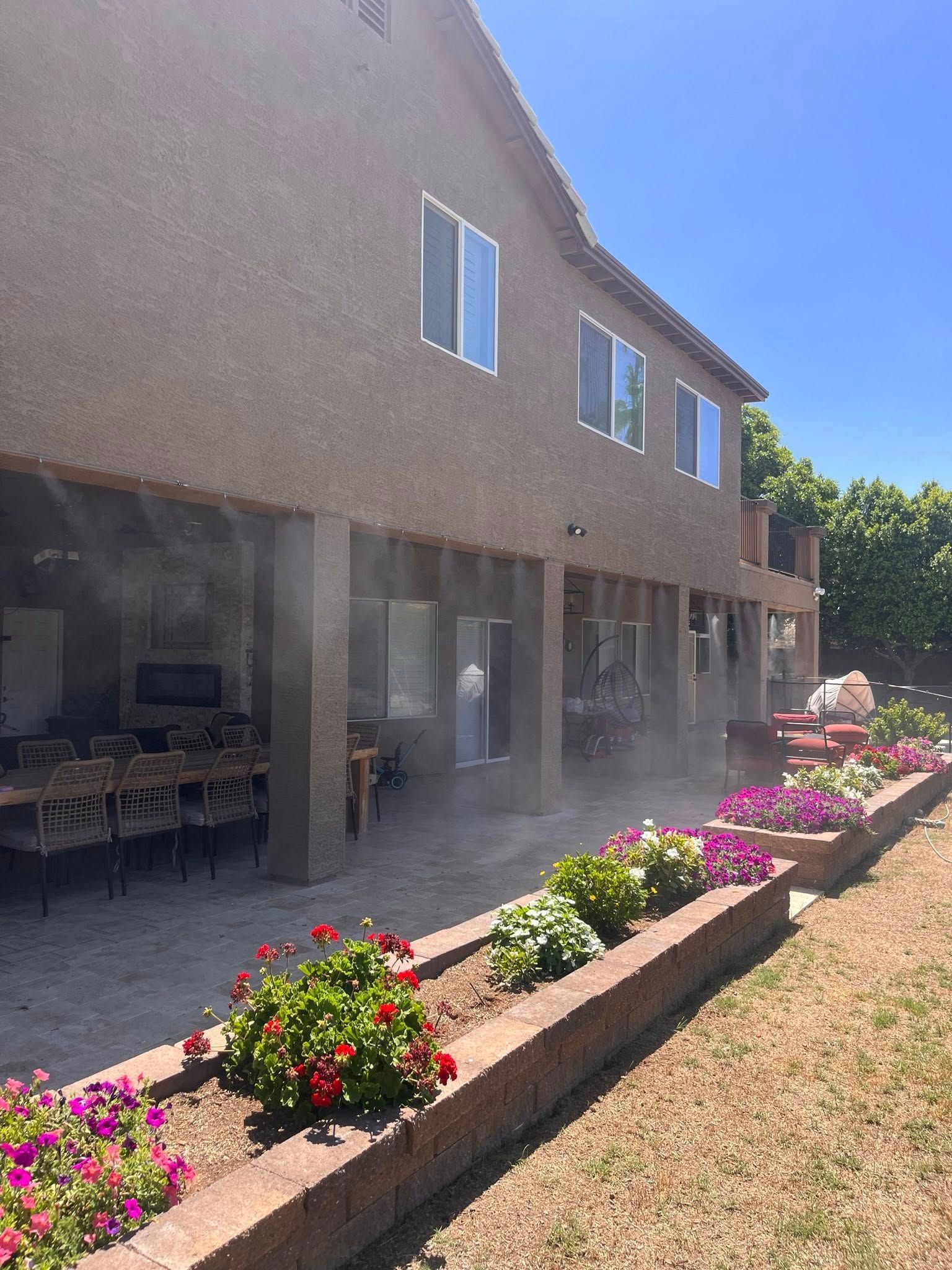
Patios Built for Arizona's Hottest Months
Misting Services in Mesa for outdoor areas that lose functionality during summer heat
Ambient temperatures in Mesa, Phoenix, Fountain Hills, and surrounding areas regularly exceed 110 degrees from June through August, making patios, pool decks, and outdoor dining spaces unusable without climate intervention. Desert Glow Lighting & Misting installs misting systems that lower the immediate air temperature in targeted zones, allowing homeowners and commercial properties to maintain outdoor activity during peak heat. These systems deliver a fine spray that evaporates before reaching surfaces, providing cooling without creating wet conditions underfoot.
Misting systems work by forcing water through specialized nozzles under pressure, producing droplets small enough to evaporate rapidly while absorbing heat from surrounding air. The result is a measurable temperature drop in the misted zone—often 20 to 30 degrees depending on ambient humidity and airflow. System layout depends on the area's size, typical wind patterns, and whether the space is fully covered or partially exposed. Nozzle spacing and line routing are planned to provide even coverage without overspray onto furniture or adjacent indoor thresholds.
Request a consultation to review your outdoor space and discuss a misting layout that matches how you use the area during summer.
Why Customized System Design Affects Performance
Each misting installation begins with an assessment of the property's outdoor layout, existing shade structures, and cooling priorities. Nozzle count and placement are calculated based on the square footage being treated and the degree of exposure to sun and wind. Desert Glow Lighting & Misting selects components designed to handle Arizona's hard water without clogging, and lines are secured along roof edges, pergola beams, or fencing to remain unobtrusive while delivering consistent coverage.
Once operational, you notice a distinct temperature drop when stepping into the misted area, and the cooling effect allows outdoor seating and dining to continue comfortably during hours that would otherwise drive occupants indoors. The mist itself dissipates quickly, so furnishings and flooring stay dry unless nozzles are positioned too low or wind redirects the spray. Systems include manual or automated controls, allowing activation based on temperature thresholds or scheduled times.
Proper nozzle selection matters—larger droplets create wet conditions, while excessively fine mist drifts beyond the intended zone. Pressure levels are calibrated during installation to produce the optimal droplet size, and filters prevent mineral buildup from compromising nozzle performance over time. Commercial properties benefit from zoned systems that cool customer-facing areas like restaurant patios or event spaces without treating back-of-house zones unnecessarily.
Answers to Frequent Service Questions
Misting systems raise questions about cooling effectiveness, water consumption, and maintenance demands in desert climates. The following addresses common considerations before installation.
Desert Glow Lighting & Misting tailors each misting installation to the property's layout and intended use, ensuring effective cooling without operational complications. Schedule an evaluation to discuss system sizing and placement options for your outdoor areas.
How much water does a misting system use during operation?
Consumption depends on nozzle count and run time, but most residential systems use one to five gallons per hour. Because the mist evaporates rather than pooling, water usage remains relatively modest compared to the cooling benefit provided.
What prevents nozzles from clogging in areas with hard water?
Inline filters remove sediment and minerals before water reaches the nozzles, and periodic filter replacement keeps the system flowing freely. In Mesa, where water hardness is a known factor, filter maintenance becomes part of routine upkeep.
When is the best time to install a misting system?
Installation before summer allows testing and adjustments during milder temperatures, ensuring the system performs correctly once heat arrives. Spring installations also avoid scheduling delays common during the peak demand period in early summer.
How is the system controlled once installed?
Most systems include a timer or thermostat control that activates misting when temperatures reach a set threshold. Manual overrides allow on-demand operation for gatherings or events outside typical schedules.
What surfaces work best near misting zones?
Stone, concrete, and tile handle occasional moisture without issue, while unsealed wood or fabric furnishings should be positioned outside the direct mist path to prevent dampness. System design accounts for furniture placement to avoid unintended overspray.