
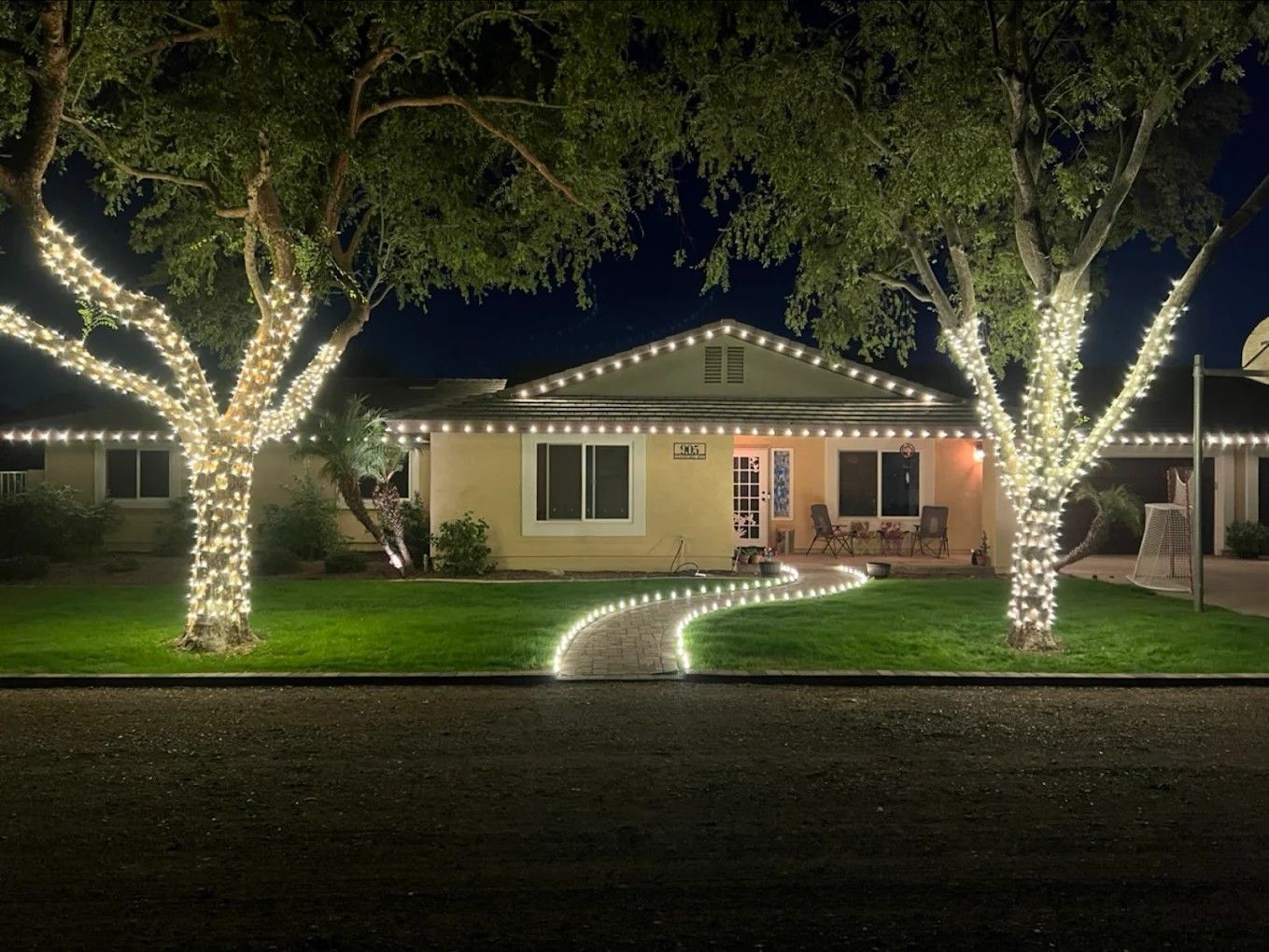
Outdoor Spaces That Work After Dark
Residential Lighting Solutions in Mesa for properties where outdoor living extends well past sunset
Arizona homeowners spend substantial time outdoors year-round, which means driveways, patios, and landscaped areas need functional visibility once the sun drops. Desert Glow Lighting & Misting designs residential lighting that addresses entryways, walkways, architectural features, and gathering spaces with layouts built around how you actually use the property after dark. Proper placement means you see stairs clearly, guests navigate pathways without hesitation, and landscape investments remain visible throughout the evening.
Residential lighting addresses multiple needs simultaneously: safety along steps and transitions, visibility for evening entertaining, and accent illumination that highlights landscaping or architectural detail. Each installation considers the property's layout, existing structures, and which areas see the most activity after sunset. Energy-efficient fixtures reduce operating costs while maintaining consistent light output across seasons.
Schedule a property evaluation to review entryway conditions, patio layouts, and current visibility concerns in Mesa, Fountain Hills, Phoenix, and surrounding areas.
What Proper Outdoor Lighting Accomplishes
Lighting plans account for fixture placement height, beam angles, and the specific surfaces being illuminated—whether that's textured stone, planted beds, or smooth stucco walls. Fixtures positioned too high wash out detail, while ground-level placement creates glare and reduces effective coverage. The goal is controlled light distribution that highlights intended features without spilling onto neighboring properties or creating harsh shadows.
Once the system is active, pathways become navigable without supplemental flashlights, entryways provide clear visibility of door hardware and locks, and outdoor seating areas support conversation and dining without reliance on portable lanterns. Landscape features like mature trees, decorative rock arrangements, or water features gain definition that wasn't visible during daylight hours. The property remains functional for activities that previously required indoor migration once natural light faded.
Customized plans address specific property characteristics: single-story versus multi-level homes, open desert lots versus established neighborhoods, and properties with extensive hardscaping versus primarily turf and planting beds. Fixture selection varies based on exposure to monsoon storms, dust accumulation patterns, and the need for shielded versus open light distribution.
What Property Owners Usually Ask
Residential lighting systems generate practical questions about installation scope, fixture durability, and operational considerations specific to Arizona's climate and outdoor living patterns.
Desert Glow Lighting & Misting provides consultation-focused assessments that address property-specific layout challenges and lighting goals. Request a detailed review of your outdoor spaces to identify fixture placement options and coverage strategies.
What areas benefit most from added lighting?
Entryways, stairways, and transition points between surfaces address safety directly, while patio perimeters and landscape beds extend usability and visual interest after dark.
How do fixtures hold up during monsoon season?
Systems installed in Mesa account for dust infiltration, occasional high winds, and heavy rain events by using sealed housings and secure mounting methods that prevent displacement or moisture intrusion.
What's the difference between pathway lighting and accent lighting?
Pathway fixtures provide downward illumination for walking surfaces, using shielded bulbs to minimize glare, while accent lights use directional beams to highlight specific architectural or landscape features from a distance.
How does energy-efficient lighting affect monthly costs?
LED fixtures consume significantly less power than halogen or incandescent alternatives, and when paired with timers or photocell controls, systems operate only during necessary hours rather than continuously.
When should lighting be adjusted seasonally?
Timer settings typically shift between summer and winter months as sunset times change, and fixture angles may require adjustment if plant growth alters intended coverage areas or creates unwanted shadows.